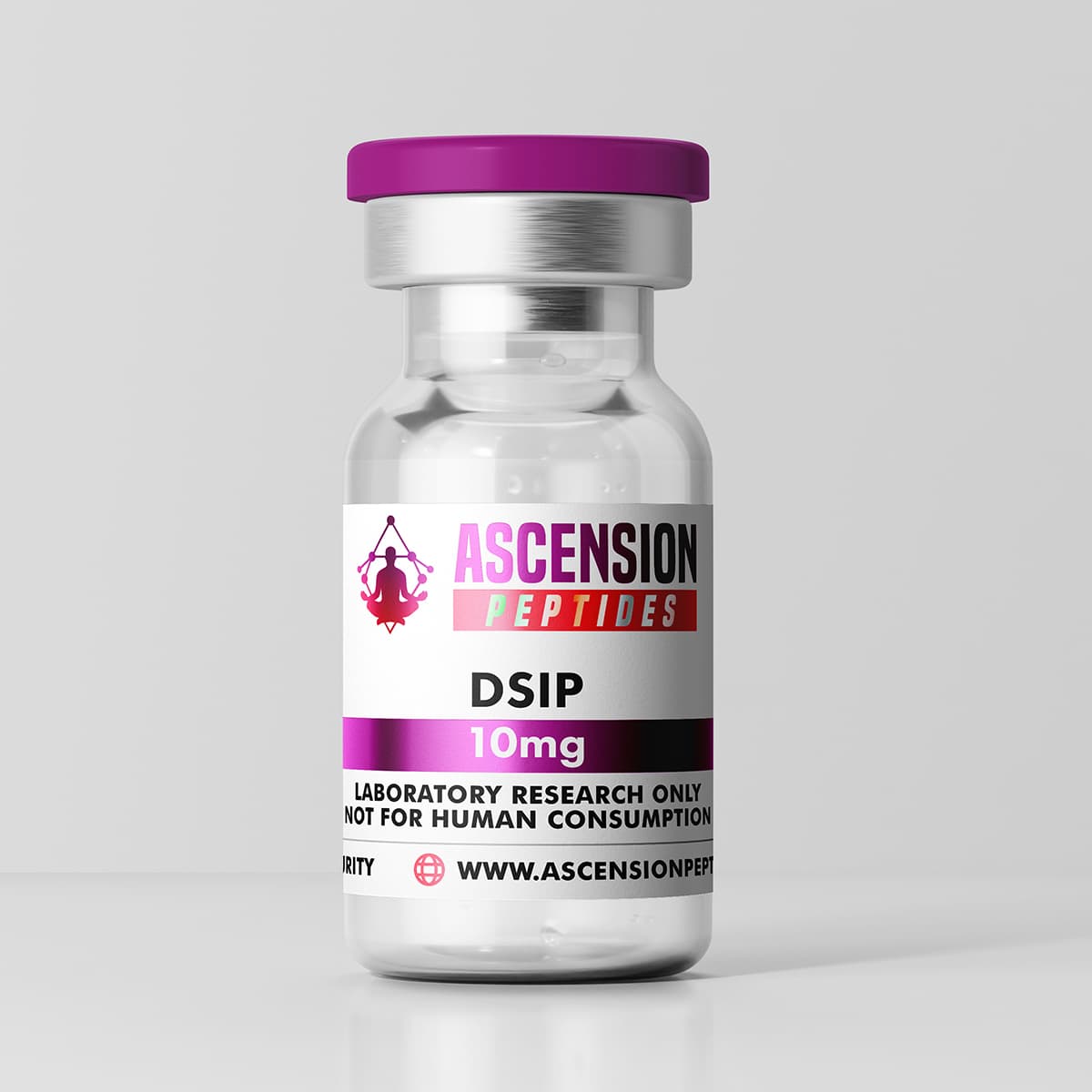
DSIP Peptide: Benefits, Dosage, Side Effects and Sleep Research
DSIP peptide is short for delta sleep-inducing peptide, a nine-amino-acid neuropeptide discussed for deep sleep, sleep architecture, stress response, and recovery. The name makes it sound like a knockout sleep drug. It is not. The more honest read is that DSIP may help normalize disturbed sleep in some people, especially when the issue is fragmented sleep or poor deep sleep rather than a simple circadian problem.
That distinction matters. If you are awake because your schedule is shifted, melatonin and light timing make more sense. If you are awake because anxiety is driving cortical arousal, Selank or a clinical anxiety plan may fit better. If you fall asleep but wake unrefreshed, or your sleep tracker shows very little deep sleep, DSIP is the peptide people usually start researching.
Key Takeaways
- What it is: DSIP is delta sleep-inducing peptide, also called emideltide, with the sequence Trp-Ala-Gly-Gly-Asp-Ala-Ser-Gly-Glu.
- Main intent: people search this keyword for sleep quality, deep sleep, dosage, side effects, and whether DSIP actually works.
- Best fit: poor sleep quality, frequent awakenings, low deep sleep, or stress-linked sleep disruption.
- Weak fit: jet lag, shift work, untreated sleep apnea, severe anxiety, late caffeine, alcohol-related sleep problems, or bad sleep hygiene.
- Evidence check: early human studies showed promising sleep-normalizing signals, but later controlled data found small or inconsistent benefit.
- Practical protocol: most user protocols discuss 100 to 300 mcg before bed, cycled rather than run indefinitely.
- Main side effects: vivid dreams, morning grogginess, mild headache, dizziness, nausea, or injection-site irritation.
Quick Answer
DSIP is best treated as a sleep-architecture peptide, not a sedative. It may help some people get deeper, less fragmented sleep, but the clinical evidence is mixed and response varies. If you want something that forces sleep onset, DSIP is the wrong tool. If you want to test whether deeper slow-wave sleep improves recovery, it is one of the more relevant sleep peptides to understand.
What Is DSIP Peptide?
Definition and names
DSIP stands for delta sleep-inducing peptide. It is a small peptide made of nine amino acids. You may also see it called delta sleep peptide or emideltide. The sequence is usually written as WAGGDASGE.
Why people search for it
Most people are not searching because they care about peptide chemistry. They want to know whether a DSIP peptide can help them sleep deeper, wake up less, dream more normally, or recover better after years of poor sleep. That is the intent this guide answers.
The reason DSIP became famous is simple: it was linked to delta-wave sleep, the deep slow-wave stage associated with physical recovery, memory processing, and feeling restored the next morning. That does not mean it works like a sleeping pill. Most sedatives reduce awareness by pushing broad central nervous system suppression. DSIP is discussed more as a sleep-regulation signal.
That difference explains why user reports are split. Some people say they sleep deeper without feeling drugged. Others feel nothing. Some get vivid dreams. A few get groggy. The peptide seems more context-dependent than melatonin, antihistamines, or prescription hypnotics.
How DSIP Works
The mechanism is not fully mapped
The exact mechanism is still not fully settled. That uncertainty should be part of any honest guide. DSIP has been studied for sleep regulation, neuroendocrine signaling, stress response, and pain or withdrawal contexts, but it does not have the clean, simple receptor story that many modern drugs have.
Main pathways discussed
The working model is that DSIP influences sleep architecture through several overlapping systems:
- Delta-wave activity: the effect people care about most is deeper slow-wave sleep.
- HPA-axis signaling: DSIP has been studied for effects on ACTH and stress-hormone patterns.
- GABA and serotonin tone: indirect effects may explain calmer sleep without classic sedation.
- Opioid-system cross-talk: this is one reason older withdrawal studies keep getting mentioned.
- Growth hormone rhythm: deeper sleep may indirectly support the sleep window when GH pulses normally happen.
The short version: DSIP does not simply knock you out. It may push a disturbed sleep system toward a more normal pattern. That is why people with fragmented sleep may notice more than people who already sleep well.
What the Top Search Results Get Right
The current search results for this keyword are not looking for a chemistry lecture. They are trying to answer five practical questions:
- What is DSIP and does it actually help sleep?
- What dosage do people use?
- What are the side effects?
- How does it compare to melatonin, CJC-1295 plus Ipamorelin, Selank, or prescription sleep aids?
- Is the evidence strong enough to justify trying it?
This article is built around those questions. The honest answer is neither “DSIP is magic” nor “DSIP is useless.” It sits in the middle: interesting mechanism, older human data, mixed controlled results, and strong individual variability.
DSIP Peptide Benefits
What people are actually trying to improve
The benefits people look for are mostly sleep-related, with secondary interest in stress, recovery, and withdrawal support. Here is the practical breakdown.
Deeper sleep
The main use case is better slow-wave sleep, especially for people who sleep long enough but wake unrested.
Fewer awakenings
Some studies and users report less nighttime waking and improved sleep continuity.
Less sleep stress
DSIP may help when stress signaling is part of the wake-up pattern, especially early-morning awakenings.
Better recovery
If sleep quality improves, training recovery, soreness, and morning energy may improve indirectly.
Vivid dreaming
Some people notice more dream recall. This can be a sign of changed sleep architecture, not necessarily a problem.
Withdrawal interest
Older clinical literature explored DSIP during alcohol and opioid withdrawal, mainly around sleep and symptom relief.
What DSIP Does Not Do
This section matters because a lot of poor experiences come from using the peptide for the wrong job.
- It does not force sleep like zolpidem. If you want a knockout effect, DSIP will feel weak.
- It does not fix circadian timing. Jet lag and shift work are melatonin, light, and schedule problems.
- It does not replace sleep hygiene. Late caffeine, alcohol, screens, and inconsistent bedtimes still win.
- It does not treat sleep apnea. If breathing disruption is the issue, a peptide is not the answer.
- It does not work equally for everyone. Non-response is common enough that you should track results instead of assuming it works.
Human Study Data
Why the evidence is mixed
The human sleep data is the part most articles either oversell or ignore. Early studies reported better sleep duration, fewer interruptions, and sleep-normalizing effects after DSIP administration. A 1981 study in chronic insomnia described longer sleep duration, higher sleep quality, fewer interruptions, and no daytime sedation in a small group.
Why you should stay skeptical
But a later controlled insomnia study was much less enthusiastic. It reported some changes such as increased total sleep time and NREM sleep time, but concluded the improvement was of little clinical significance. That mixed record is exactly why DSIP should be framed as experimental and response-dependent rather than as a guaranteed sleep cure.
DSIP Dosage
Common discussion ranges
There is no universal medical dosing standard for DSIP. The ranges below reflect common peptide-community discussion and published study context, not personal instructions.
Why Higher Doses Can Backfire
Sleep peptides are not caffeine in reverse. More does not automatically mean deeper sleep. Many users who push DSIP too high report morning heaviness, dullness, or worse sleep fragmentation. That usually means the dose does not fit, not that the person needs more.
A practical test is simple: if 100 to 200 mcg improves sleep but 400 mcg makes the next morning worse, the lower dose is the better dose. If nothing changes after a short, consistent trial, the problem may not be DSIP-responsive.
Timing and Cycle Length
When people usually take it
Most protocols place DSIP 30 to 60 minutes before bed. Some people prefer slightly earlier because the effect can feel subtle and delayed. Taking it too late may increase the chance of morning grogginess, especially at higher amounts.
Why most people cycle it
Cycle length is usually short: 5 to 10 nights, then a break. The reason is not proven dependence. It is practical. People often report that effects plateau, and short cycles make it easier to judge whether the peptide is still helping.
Reconstitution and Storage
Mixing basics
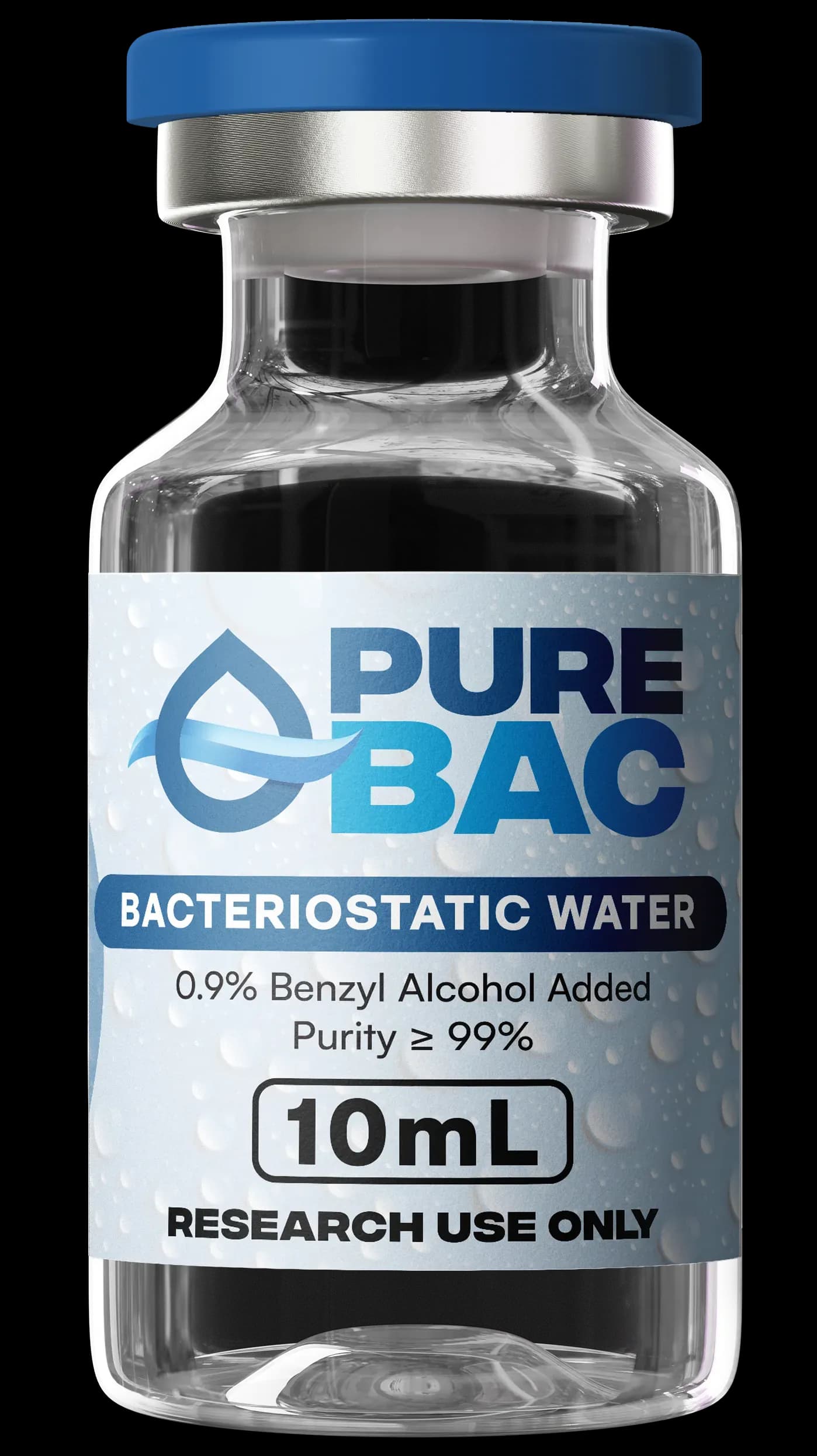
Most DSIP peptide products are sold as lyophilized powder. The common workflow is to add bacteriostatic water, swirl gently, refrigerate, and use small insulin-syringe volumes. Do not shake the vial aggressively.
Example Math
If a 10 mg vial is mixed with 2 mL bacteriostatic water, the concentration is 5,000 mcg/mL. On a U-100 insulin syringe, 2 units equals about 100 mcg and 4 units equals about 200 mcg. Always confirm your own vial size and water volume before dosing.
Do the math before injecting
For exact calculations, use the peptide calculator and our reconstitution guide.
DSIP Side Effects
Most common issues
Most reported side effects are mild, but they still matter. Sleep compounds can ruin the next day if the dose, timing, or underlying problem is wrong.
When to stop
Stop and reassess if the peptide makes sleep lighter, creates next-day impairment, causes repeated nausea or dizziness, or worsens mood. A sleep tool is only useful if it improves both the night and the next day.
Who Should Avoid DSIP
- Pregnant or breastfeeding people: avoid due to limited safety data.
- Untreated sleep apnea: fix breathing first. More deep sleep is not the solution to airway collapse.
- Active substance withdrawal: this belongs under medical supervision.
- Severe psychiatric instability: sleep architecture changes can affect mood and medication response.
- People mixing sedatives or alcohol: combining sleep-active compounds raises risk and makes response harder to interpret.
DSIP vs Melatonin
Timing signal vs depth signal
Melatonin and DSIP solve different problems. Melatonin is a timing signal. It tells the brain that night is approaching. DSIP is discussed more as a sleep-quality or sleep-architecture signal.
| Question | DSIP | Melatonin |
|---|---|---|
| Best for | Deep sleep quality and fragmentation | Jet lag, delayed sleep timing, shift work |
| Feels like | Subtle depth, sometimes vivid dreams | Sleepiness or earlier sleep timing |
| Fast effect | Variable | Often same night |
| Common mistake | Expecting sedation | Taking too high a dose |
| Can combine? | Sometimes, especially when timing and sleep quality are both problems | |
DSIP vs Prescription Sleep Aids
Prescription sleep medications usually target sleep onset or sleep maintenance. They can be useful in the right clinical setting, but they often create a different experience from DSIP. Many sedatives help you become unconscious faster. That does not always mean they improve the stages of sleep that make the next day feel better.
That is why people comparing DSIP to zolpidem, benzodiazepines, antihistamines, trazodone, or quetiapine are often asking the wrong question. If the problem is acute crisis insomnia, a clinician may use a medication that reliably forces sleep. If the problem is non-restorative sleep with enough hours in bed, the question becomes sleep architecture, not just sleep onset.
The cleanest takeaway is this: DSIP is not a replacement for medical insomnia care. It is a niche peptide people consider when the goal is better sleep quality rather than stronger sedation.
That also means expectations should be measured. If a doctor is treating dangerous insomnia, severe depression, mania, medication withdrawal, or sleep loss that affects driving or work safety, a peptide article should not be the plan. DSIP belongs in the lower-risk optimization conversation, not the emergency sleep-medicine conversation.
DSIP vs CJC-1295 and Ipamorelin
Sleep peptide vs GH peptide stack
CJC-1295 and Ipamorelin are growth hormone secretagogue peptides. They can improve sleep as a side effect because GH pulses and slow-wave sleep are linked. DSIP targets the sleep side of that equation more directly.
If your sleep problem is tied to poor recovery, low training resilience, and weak sleep depth, CJC-1295 plus Ipamorelin may be worth comparing. If your main issue is sleep architecture without a broader GH-support goal, DSIP is the cleaner starting point. See our CJC-1295 vs Ipamorelin guide for the GH peptide side.
DSIP vs Selank
Selank is usually discussed for anxiety, calm, and stress resilience. It may help sleep indirectly if anxiety is the driver. DSIP is more focused on the sleep architecture conversation.
A simple rule: if you cannot sleep because your mind is racing, compare Selank first. If you sleep but never feel restored, compare DSIP first.
Can You Stack DSIP?
Start with one variable
Stacking is possible, but beginners should be conservative. Sleep is easy to disrupt. If you add DSIP, melatonin, magnesium, CJC-1295, Ipamorelin, Selank, glycine, and a prescription sleep drug all at once, you will have no idea what helped or what hurt.
- DSIP + magnesium glycinate: common low-friction combination.
- DSIP + low-dose melatonin: useful when timing and deep sleep both matter.
- DSIP + CJC-1295/Ipamorelin: used by people targeting sleep plus recovery.
- DSIP + Selank: considered when anxiety and sleep fragmentation overlap.
How to Tell if It Is Working
Track trends, not one night
Do not judge DSIP by one night. Track a short cycle and look for patterns:
- Fewer awakenings
- More deep sleep on a wearable, if you use one
- Better morning energy
- Less sleep anxiety
- Better recovery after training
- Less urge to nap the next day
Use wearables carefully
Wearables are imperfect, but trends are useful. If your sleep score improves while you feel worse, trust your body more than the device.
Where to Buy DSIP
Testing matters more than branding
Sourcing matters. Look for batch-specific testing rather than generic purity claims. At minimum, a vendor should provide HPLC purity, mass confirmation, batch number, clear vial size, storage guidance, and responsive support.
DSIP is also a peptide where price should not be the only filter. Sleep-active products with unclear testing are not worth the risk. For broader sourcing standards, read our legit peptide vendor guide and COA guide.
Best DSIP Use Case
Best-fit profile
The best use case is narrow: someone who already has decent sleep timing and sleep hygiene but still gets poor-quality sleep, frequent awakenings, or low deep sleep. This person is more likely to notice DSIP than someone using it to offset caffeine, alcohol, late-night screens, shift work, or untreated sleep apnea.
Worst-fit profile
The worst use case is expecting a peptide to override bad inputs. DSIP is not a license to ignore the basics. It is a possible tool after the basics are not enough.
Frequently Asked Questions
Practical Checklist Before Trying It
Before using a DSIP peptide, answer these questions clearly:
- Is my sleep schedule consistent enough to judge the result?
- Have I ruled out obvious problems like alcohol, late caffeine, high room temperature, or untreated snoring?
- Am I trying to improve sleep quality rather than force sleep onset?
- Do I know the vial concentration and injection volume?
- Do I have a stop rule if the peptide causes grogginess or worse sleep?
If those answers are fuzzy, fix the basics first. DSIP is easiest to evaluate when the rest of the routine is stable. Otherwise every night becomes a confounded experiment.
Bottom Line
DSIP is interesting because it targets the part of sleep people actually care about: feeling restored. But it is not a guaranteed insomnia fix. The best evidence is mixed, and the best real-world use case is narrow. If your issue is poor sleep timing, start with circadian tools. If your issue is anxiety, address anxiety. If your issue is non-restorative sleep despite a decent routine, DSIP is worth understanding.
Use the smallest reasonable trial, track sleep and next-day function, and stop if the result is grogginess without better recovery. That is the difference between using a sleep peptide intelligently and just adding another variable to an already messy sleep problem.
References
- Schneider-Helmert D, Schoenenberger GA. The influence of synthetic DSIP on disturbed human sleep. Experientia. 1981.
- Schneider-Helmert D, Schoenenberger GA. Effects of DSIP in man. Neuropsychobiology. 1983.
- Monti JM et al. Study of DSIP efficacy in chronic insomniacs. Int J Clin Pharmacol Res. 1987.
- Efficacy of DSIP to normalize sleep in middle-aged and elderly chronic insomniacs. PubMed.
- Dick P et al. DSIP in the treatment of withdrawal syndromes from alcohol and opiates. Eur Neurol. 1984.
- Schoenenberger GA. Characterization, properties and multivariate functions of DSIP. Eur Neurol. 1984.
- Reduction of immunoreactive ACTH in plasma following intravenous injection of DSIP in man. PubMed.
The information in this article is for educational purposes only and does not constitute medical advice. Always consult a healthcare professional before starting any new supplement or compound. Results vary by individual.